Nomad Commons / Life on wheels basics
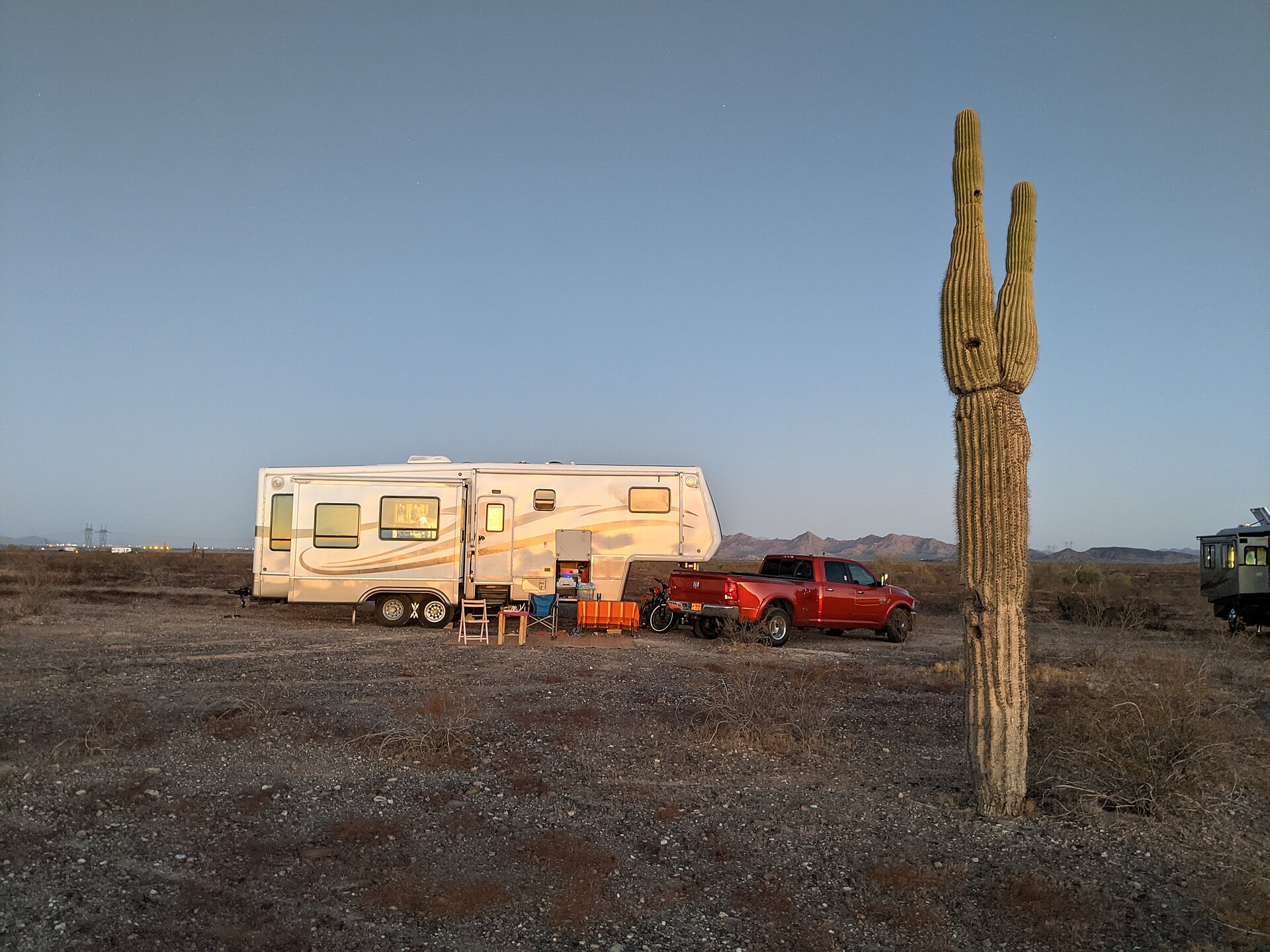
Most people who live on wheels camp on public land for free, a practice called boondocking. The Bureau of Land Management generally allows 14 days of dispersed camping in any 28 day period before you move on, and you bring your own water, power and waste handling. New to it? HOWA's getting-started guide and Mentoring Camp are good first stops.
Facts checked November 11, 2026 against the Bureau of Land Management and homesonwheelsalliance.org.
Words you'll hear
- Boondocking
- Camping outside developed campgrounds, usually on public land and usually free, with no hookups. Also called dispersed or dry camping.
- BLM
- The Bureau of Land Management, the federal agency that manages most public land in the West, including much of the desert around Quartzsite, Arizona.
- Stay limit
- How long you can camp in one spot. On BLM land it is generally 14 days in any 28 day period, then you move on.
- LTVA
- Long-Term Visitor Area: BLM land where you can stay all winter with a permit. La Posa, just south of Quartzsite, is one.
- Self-contained
- A rig that carries its own fresh water, power and waste tanks, so it needs no hookups. HOWA asks RTR campers to come self-contained.
- Hookups
- Water, electric and sewer connections at a campground site. Boondocking has none.
- Gray and black water
- Gray water is used sink and shower water. Black water is toilet waste. Both are emptied at a dump station, never on the ground.
- Dump station
- A place to empty waste tanks and often refill fresh water. La Posa LTVA has one.
- Rubber tramp
- Someone who lives and travels in a vehicle. The Rubber Tramp Rendezvous takes its name from it.
- Leave no trace
- Pack out what you bring, camp on ground that is already disturbed, and leave the land as you found it.
Ready to roll?
Tick off the basics for living off-grid. Your list is saved on this device.
0 of 10 ready
Saved on this device only. Nothing is sent anywhere.
Camping basics from the BLM
- Stay limits: dispersed camping is generally limited to 14 days in any 28 day period. Limits vary by state and field office, so check local rules.
- When you move, the BLM says to go to a new location, often at least 25 to 30 miles away.
- Camp on spots that are already disturbed, within 150 feet of a road and at least 200 feet from water.
- Pack out all trash. Use a portable toilet or pack out human waste where you can.
- Use existing fire rings or a fire pan, check current fire restrictions, and make sure fires are fully out.
Source: BLM, Camping on Public Lands. Obey posted signs; rules change.
Long-Term Visitor Areas
La Posa Long-Term Visitor Area sits about 2 miles south of Quartzsite on Highway 95. The BLM runs it from September 15 to April 15, with a season permit or a 14 day short-visit permit, plus a dump station, water, trash service and vault toilets. Check current fees with the BLM before you go.
Help getting started
New to life on wheels?
HOWA's starting point for people beginning their nomad journey.
Start here →homesonwheelsalliance.orgMentoring Camp
Guidance for moving into a sustainable mobile life.
Open on the HOWA site →homesonwheelsalliance.orgIn Person Caravans
Travel and camp together with other nomads.
Open on the HOWA site →homesonwheelsalliance.orgNeed help right now?
Programs and services for nomads in need, including the E-Fund.
Get help →homesonwheelsalliance.orgCommon questions
What is boondocking?
Boondocking, also called dispersed camping, means camping outside developed campgrounds, usually on public land, with no hookups for water, power or sewer. Your rig has to carry its own water, power and waste. Much of the land around Quartzsite, Arizona, where HOWA holds the RTR, is Bureau of Land Management land used this way.
How long can you camp on BLM land?
The Bureau of Land Management says dispersed camping is generally limited to 14 days within any 28 day period, though limits vary by state and field office. After that you move to a new spot, often 25 to 30 miles away. Long-Term Visitor Areas such as La Posa near Quartzsite allow longer stays with a permit during the winter season.